
Food waste is, and has always been, a relevant socioeconomic issue. Over the past 15 years, we’ve been slowly coming around to its environmental impacts. It may be the clearest instance of how the environmental and social issues are inextricably linked, and the hospitality sector is deeply involved.
Entrée: social
Food is a basic necessity: we need food to stay alive. And in every society, in every era, it also has power and meaning as part of our culture; we associate its preparation, flavouring and consumption with our identity and community. And food is taken for granted only recently, and only in some parts of the world.
Food came along with a couple of evil siblings. One is scarcity, which is as old as humanity, and a younger one: food waste. It’s young, but by no means new; before the modern era food was lost through deficient storage conditions, pests, mold, or it simply rotted away. Now many of us have access to all kinds of means of preserving food: freezing, vacuum-packing, pasteurisation and UHT to limit bacterial proliferation, canned food, dry food, refrigeration, you name it.
And yet food keeps being wasted. We’re producing more and better food than ever and a staggering amount of it ends up in a landfill. The EU estimates that its member states waste 58 million tonnes of food annually. That’s 132 billion euros gone down the drain. Each year. And FAO, in its State of Food Security and Nutrition in the World 2026 report, states that in 2025 645 million people faced hunger. It’s a complex and fraught problem, and although there is reason for optimism, a definite solution still eludes us.
Granted, simply reducing food waste is not the solution. But producing food just to waste it is not just a major social and economic problem. It’s also an environmental one.
Soup: environmental
Producing food is environmentally expensive. Earth, and our own ingenuity, can do it almost indefinitely for each and every living human, but how we do it and at what cost matter. Today we know that greenhouse gas emissions associated with food production account for 25-30% of global emissions. And we have to add how food production affects soil and water quality, changes erosion patterns and drives loss of biodiversity in many world regions, endangering the balance and continuity of ecosystems.
These impacts are known and there’s a constant effort to reduce them. New ways to grow fruits and vegetables, and better ways to raise and care for cattle, are being explored, tested and implemented globally. The logical tension between markets and planetary limits is being poked and prodded and eventually a “new normal” will emerge so that we can grow all the food we need in a planet that will be able to support the demand. This newsletter veers towards optimism, and so this conclusion seems apt.
In the meantime, let’s go from the lofty themes of global sustainability to the more down-to-earth issues of food waste in the hospitality sector.
Main course: governance
Hotels and food make a happy marriage. Guests can enjoy the local gastronomy and relax from the duties of grocery shopping and cooking. Hotels have to carefully gauge the number of diners, quantity and quality of food, what to do with leftovers, and so on and so forth. Like so many things in sustainability, it starts with managerial decisions.
In the EU food waste happens mainly in households, with 68 kg per inhabitant yearly. Restaurants and food services are in a distant, but still significant, third place, with 15 kg per inhabitant per year. It may not seem a lot, but it still is 12% of the food that is wasted every year.
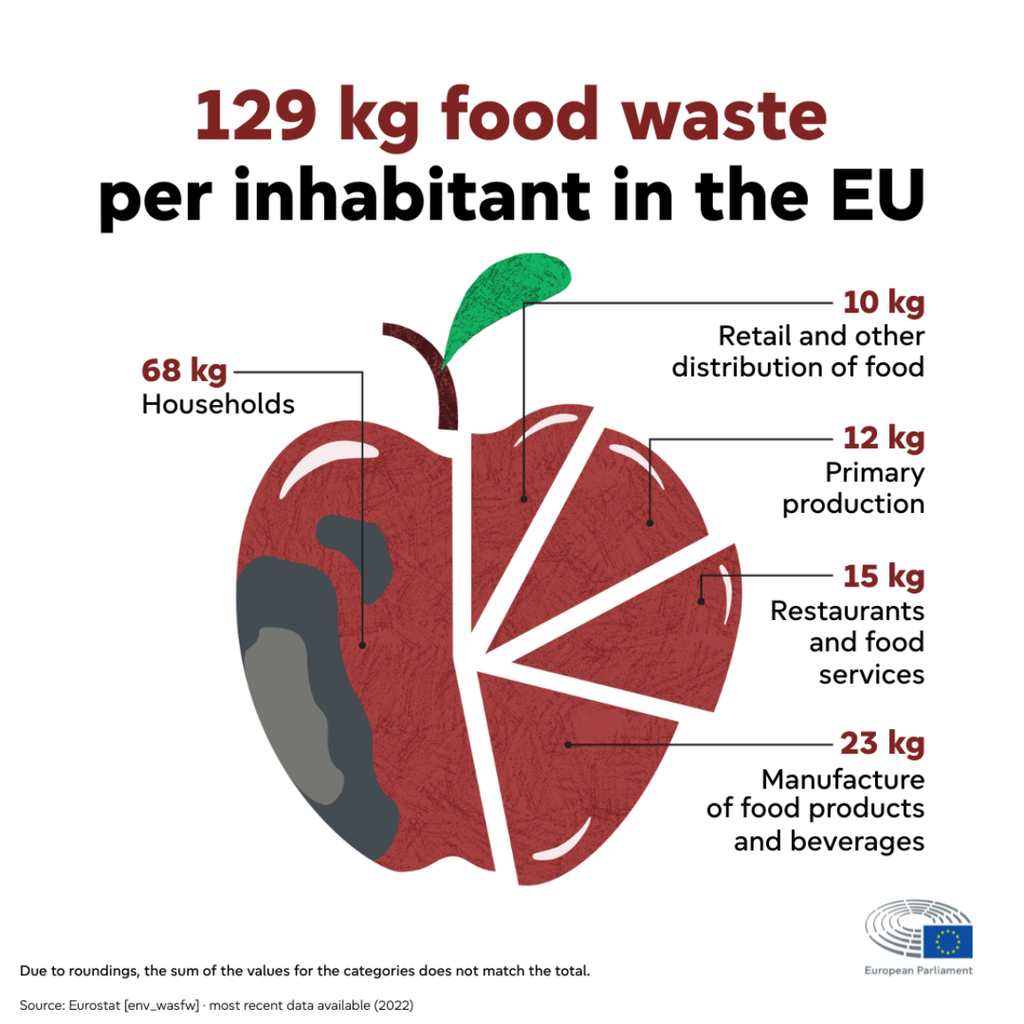
Where does it happen? Leftovers from guests not finishing their rations are, undoubtedly, a contributor. But not the only one. Subpar menu planning and poorly-planned food purchases, failure to account for seasonality, and irregular attendance to the dining areas are all things that will leave full buffet trays at the end of the day and the hotel’s finances shaken by the expense generated by food that was purchased in perfect conditions and has to be thrown away a few hours later. And let’s not forget food’s contribution to inflation and the volatility in prices of some specific items, such as what, vegetable oil or fish.
The cost is not insignificant, even without taking into consideration environmental and social externalities. Any hotel worth their salt, excuse the gastronomical pun, knows how to plan for this. And even if leftovers are inevitable, there are plenty of ways in which, with careful management, they can be significantly reduced. Here’s a few:
- Careful planning when buying ingredients, and management of expiration dates when planning menus.
- Rising guests‘ consciousness about food waste in buffets, encouraging them to go for seconds as many times as they like instead of overfilling their plate.
- Zero Waste cooking: many leftovers can be, and in many cases are, used as perfectly safe ingredients for the next meal: using leftovers for soups, broths or pies is something we’ve all known and done, and can be safely exported to hotels’ kitchens.
- Donations: it’s trickier for already cooked food, and it’s not a universal solution, there are associations, institutions and NGOs that benefit greatly from a stream of ready-to-eat, good food. Lately a plethora of apps help by putting in contact donors with recipients and helping managing the best way to bring good food to people who need it.
Dessert: sustainable
As quick and superficial as this review is, the inescapable fact is this: wasting food is wasting money. So there’s a triple benefit to reducing food waste: social, environmental, and economic. A true example of sustainability it the purest sense.